Have you ever thought that even the routine activities in your day-to-day life can become difficult if you have shoulder pain? More severely damaged joints will make it difficult to raise the arms, to sleep, or to carry out simple daily tasks. Therefore, in these situations, doctors recommend Reverse Shoulder Replacement in Ahmedabad , under which patients can maintain movement at the shoulders even after the procedure with less pain over a longer period. Typically prescribed for patients with injuries from either traumatic or overuse action, causing a serious shoulder injury that has damaged their shoulder joint, frequently accompanied by a failing rotator cuff muscle.
Understanding Reverse Shoulder Replacement
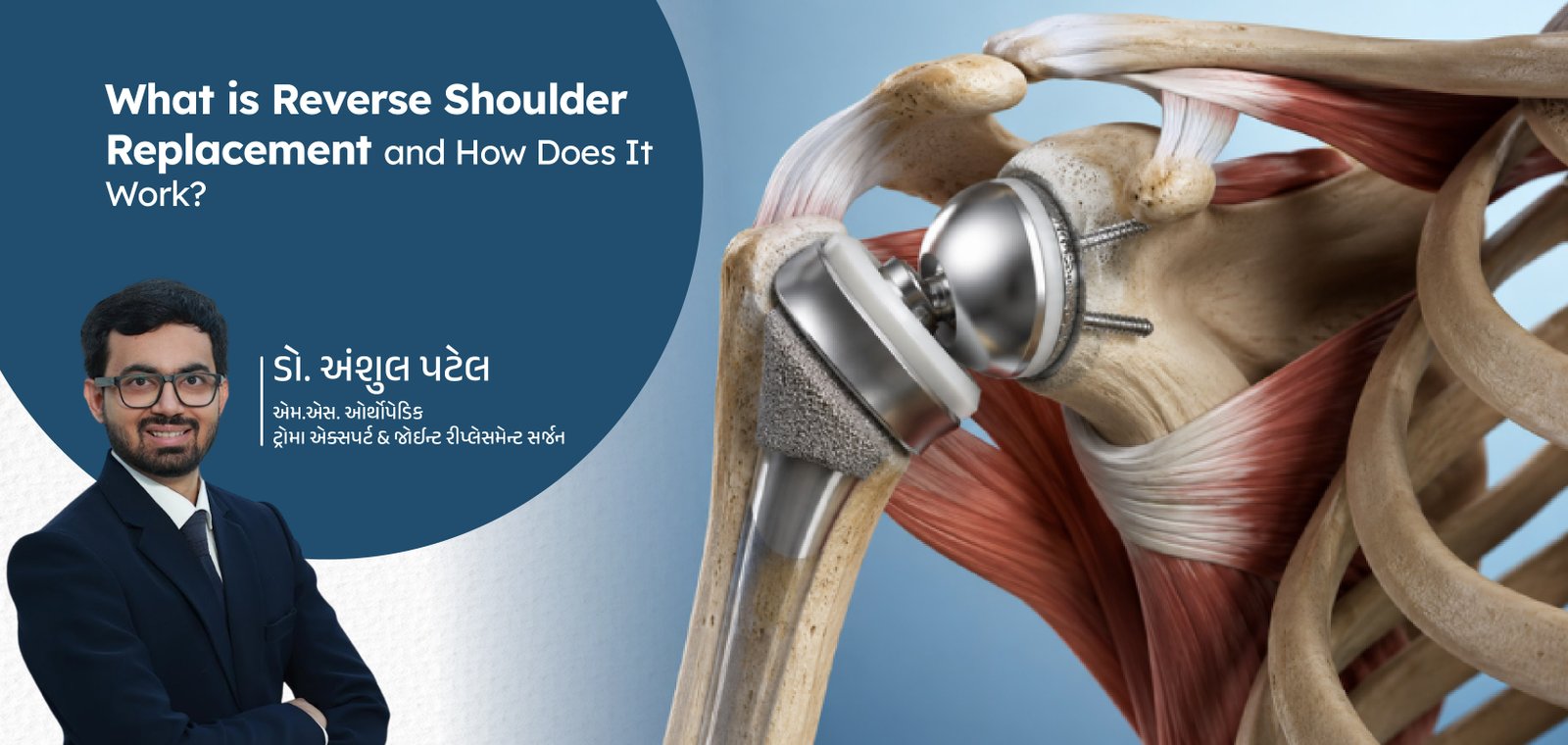
A reverse shoulder replacement is a special type of shoulder surgery in which the natural anatomy of the shoulder joint is reversed. In a normal shoulder, the ball sits at the top of the arm bone and is held in place by the socket, which is part of the shoulder blade. At this operation, the roles are reversed.
The prosthetic ball connects to the shoulder blade and lies inside a socket that is implanted in the upper arm bone. It shifts responsibility to other muscles for movement of the shoulder, in particular, isolating activation of the deltoid muscle when confronted with damage to one or both parts of the rotator cuff.
Why is Reverse Shoulder Replacement Needed?
This procedure is usually suggested by a doctor for people who have:
- Severe shoulder arthritis
- Large rotator cuff tears
- Failed previous shoulder surgeries
- Shoulder fractures in older adults
- Long-term shoulder weakness and stiffness
Most of the patients suffer from high pain in their daily routine, which hampers their nights, jobs, and daily mobility. Reverse shoulder replacement aims to improve arm function and help with daily activities.
How Does the Procedure Work?
Anaesthesia is used to carry out the surgery. The orthopaedic surgeon works to remove damaged parts of the shoulder joint and replace them with artificial components constructed of metal and robust plastic.
A reversed joint structure alters movement in the shoulder. The shoulder recruits the deltoid muscle to elevate the arm instead of depending entirely on the injured rotator cuff. This gives many patients more mobility and stability.
The whole process typically takes several hours, depending on the difficulty of the joint and the general health of the individual.
Who is a Suitable Candidate?
A person may be considered for reverse shoulder replacement if they have:
- Constant shoulder pain
- Difficulty raising the arm
- Weakness in the shoulder joint
- Arthritis combined with rotator cuff damage
- Poor results from medications or physiotherapy
An orthopaedic specialist usually recommends imaging tests such as X-rays or MRI scans before planning the surgery.
Recovery After Surgery
Recovery takes time and requires proper rehabilitation. Most patients need to wear a sling for a few weeks after surgery. Physiotherapy plays an important role in improving movement and strength.
The recovery process usually includes:
- Pain management after surgery
- Gentle shoulder exercises
- Gradual improvement in arm movement
- Strength-building exercises during physiotherapy
Many people notice improvement in pain within a few weeks, while complete recovery may take several months.
Benefits of Reverse Shoulder Replacement
Patients approached for this surgery often do so for the following reasons:
- Reduced shoulder pain
- Better arm mobility
- Improved shoulder stability
- Easier performance of daily tasks
- Better quality of life
Results depend on the individual, based on your age, muscle condition and aftercare.
Risks and Considerations
Reverse shoulder replacement, like any surgery, has its own risks.
These may include:
- Infection
- Joint dislocation
- Nerve injury
- Implant wear over time
- Stiffness after surgery
Having an experienced orthopaedic surgeon and taking care of rehabilitation after surgery may minimise the risk.
Reverse Shoulder Replacement in Ahmedabad
With modern surgical techniques and rehabilitation supportive measures, reverse shoulder replacement in Ahmedabad is available at many hospitals and orthopaedic centres. Patients may seek out established shoulder specialists, state-of-the-art operating rooms, and customised recovery regimens before committing to a treatment centre.
A good orthopaedic doctor will tell you if this is the correct procedure for you.
Final Thoughts
Reverse shoulder replacement is for those with advanced or severe shoulder damage, particularly in the case of failure of the rotator cuff muscles. This procedure alters the joint geometry in such a way that various muscles help with the shoulder movement. Once healed, most patients report greater comfort, improved range of motion, and an increased ease with everyday life.
You may find that if shoulder pain is impacting your day-to-day activities, it is useful to explore treatment options at Krishna Hospital with Dr Anshul Patel, an orthopaedic specialist, so you can discuss next steps to greater long-term relief. You can also call 7575010050.to schedule you appointment.