Joint ache that won't go away. An unexpected injury when playing sports. That annoying pain in your back that won't go away. Often, we ignore these problems and hope they'll go away on their own. But sometimes your body is silently screaming for professional treatment.
You're not the only one who has ever thought about whether it's time to go for an Orthopaedic Treatment in Ahmedabad. A lot of people put off getting treatment because they don't know when they really need to see a professional.
Let's break it down in simple words in this article, so you know exactly when to go to an orthopaedic doctor in Ahmedabad.
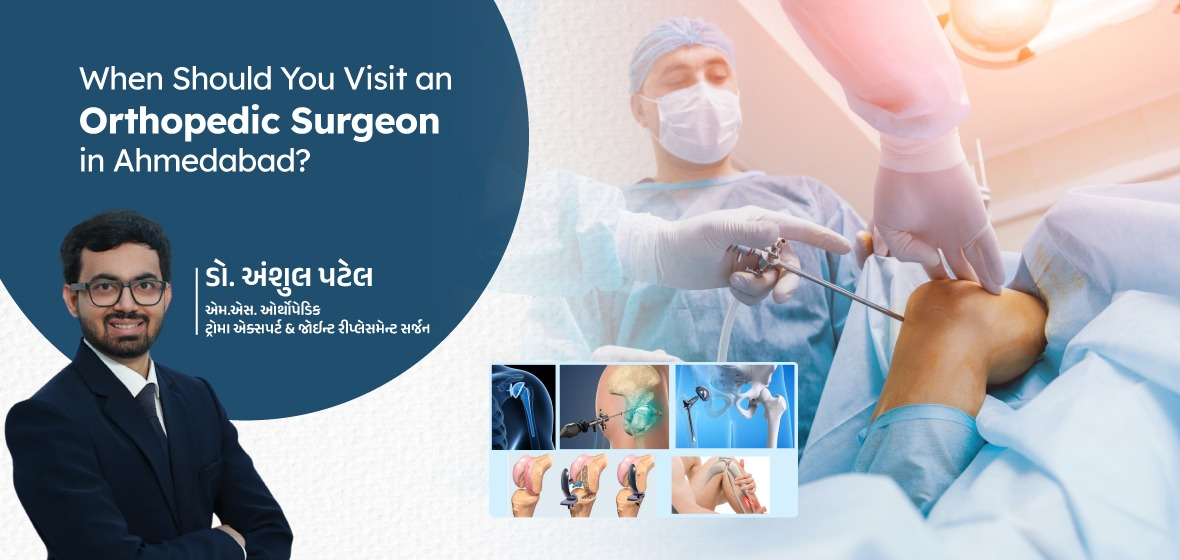
What does an orthopaedic surgeon do?
Before we talk about the indicators, it's important to know what an orthopaedic expert does.
An orthopaedic surgeon's job is to find and fix issues with :
- Bones
- Joints
- Tendons
- Muscles
- Back
They do more than simply perform surgery. A lot of orthopaedic problems may be fixed without surgery. For example, physiotherapy, medication, changing your lifestyle, or less invasive techniques can all help.
When Should You Visit an Orthopaedic Surgeon?
1. Joint pain that doesn't go away after a few weeks
If you have any of the following problems, you should think about consulting an orthopaedic surgeon in Ahmedabad :
The surgery focuses on replacing :
- Any discomfort that persists for more than two to three weeks
- Moving makes the pain worse.
- Medicines you can get without a prescription aren't working.
- In the morning, the joint feels stiff.
If you don't pay attention to persistent joint pain, diseases like arthritis or cartilage degradation might become worse without you knowing it.
2. Trouble moving or a limited range of motion
When you lose your ability to move, your body is telling you that something is wrong.
Some common causes are :
- The shoulder is frozen
- Injuries to ligaments
- Joint breakdown
- Tendonitis
A lot of the time, getting orthopaedic care early stops the condition from getting worse. A lot of individuals get their complete range of motion back when they start therapy at the correct time.
3. Changes in the joint that are visible, warm, or swollen
You should never dismiss developments that are easy to see.
Look out for :
- Swelling that doesn't go away
- Redness around the joints
- Warm to the touch
- Deformity of the joint
- Lumps that are not normal close to bones
These signs might mean that there is inflammation, an infection, bursitis, or damage to the structure.
4. Injuries from sports or sudden trauma
Injuries may happen to anybody, whether you go to the gym every day, play cricket on the weekends, or just like to be healthy.
Some common sports injuries are :
- Tears in the ACL
- Injuries to the meniscus
- Tears in the rotator cuff
- Sprains of the ankle ligaments
Getting treated early frequently means getting better faster and lessening the risk of long-term harm.
5. Back or neck pain that lasts a long time
Back discomfort is very frequent now since people sit for extended periods of time, have bad posture, and spend a lot of time in front of screens.
If you have back or neck pain, see a doctor right away
- Lasts for more than three to four weeks
- Spreads to arms or legs
- Makes you feel numb or tingly
- Gets worse at night
- Gets in the way of everyday things
These signs might mean that there are abnormalities with the discs, nerves, or spine that are getting worse.
6. Pain That Makes Your Daily Life Hard
It's time to consult a doctor if discomfort is keeping you from living your life regularly.
This involves having trouble with :
- Going for a walk
- Going up and down stairs
- Sitting for a long time
- Picking up daily things
- Resting well
A lot of people become used to pain instead of treating it, yet life is important. Most people think that orthopaedic care is less modern, more intrusive, and less focused on recovery than it really is.
7. Injuries from long ago that never fully healed
Did you sustain an injury to yourself months or even years ago, and it still aches now and then?
Past injuries may result in :
- Unstable joints
- Arthritis at a young age
- Long-term inflammation
- Weakness in the place that hurts
It's worth getting checked out even if the discomfort isn't very bad. A thorough orthopaedic exam might find problems that are already there and stop them from getting worse.
8. When Conservative Treatment Isn't Working
If you've previously tried :
- Take a break
- Drugs
- Physical therapy
Home remedies and the condition still isn't getting better, it's time to step up your treatment.
How Talking to Someone Early Makes a Big Difference
This is how a lot of orthopaedic problems start :
Early stage → easy to handle → can be fixed
The sooner you ask for help, the more therapy alternatives you normally have.
Early orthopaedic treatment typically means :
- Pain treatment that works faster
- Less intrusive care
- Less money spent on medical care
- Better ability to move about in the long term
- There can be fewer options available if you procrastinate too long.
Last Thoughts
Your body doesn't usually send pain signals for no cause. If you have persistent joint pain, a sports injury, or chronic back pain, listening early can save you months or even years of difficulty.
Don't wait for anything to become worse if it seems weird and basic care isn't helping. If you see a trained orthopaedic surgeon in Ahmedabad at Krishna Hospital, you can heal quicker, move better, and get back to doing the things you love.
If you're not sure, have it looked out. The choices you make today will affect how you can get about in the future.