Hip pain has a way of quietly taking your independence away from you. Things that used to be nothing, like walking to the market, climbing a flight of stairs, or just getting up off a chair, start feeling like a whole effort. Once the pain starts genuinely getting in the way of daily life, doctors will often bring up Bipolar Hip Replacement surgery in Ahmedabad as the more lasting solution.
Understanding what the surgery actually involves tends to take a lot of the fear out of it. So here's the whole thing, stage by stage, explained in plain language, what happens before the operation, during it, and once it's over.
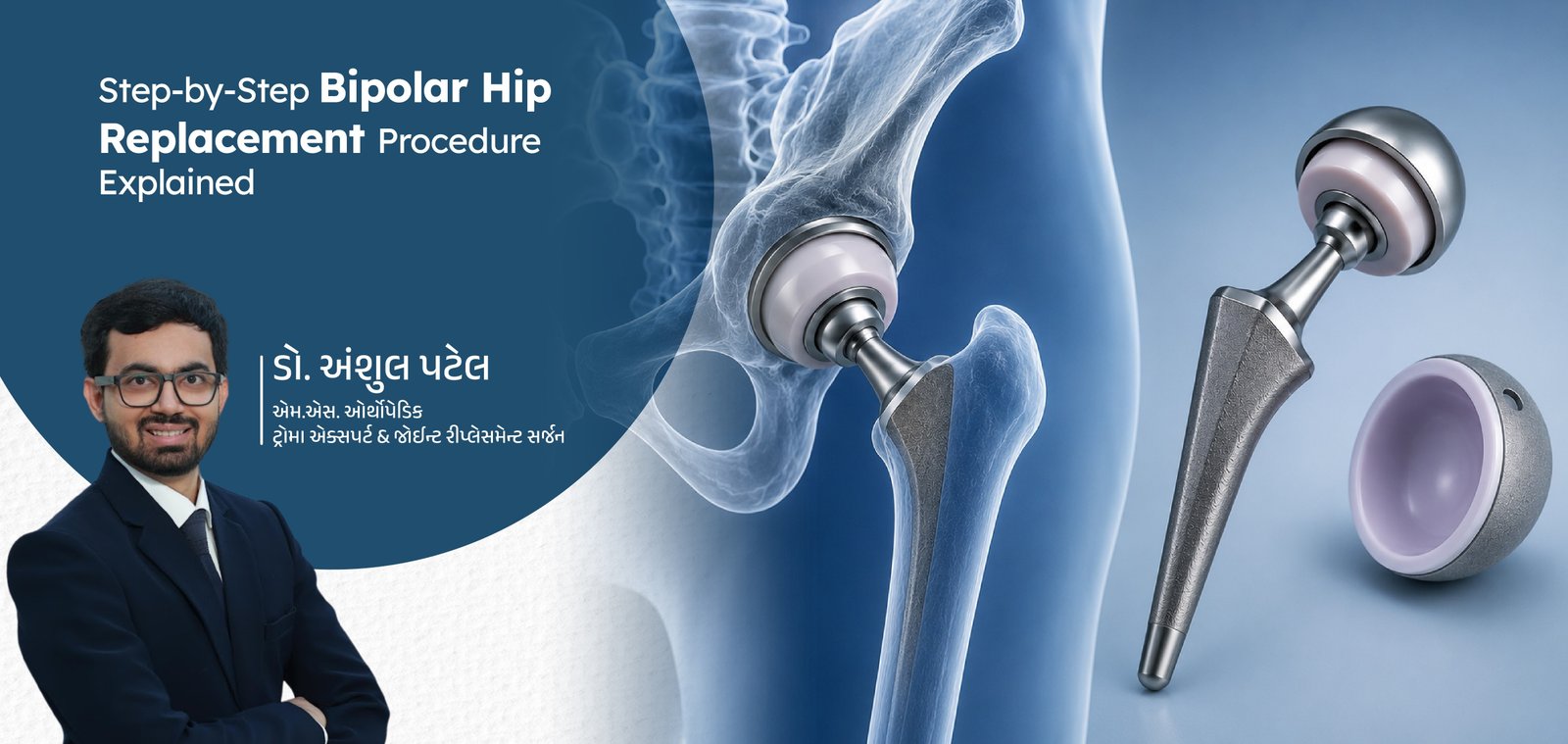
What Is Bipolar Hip Replacement Surgery?
Bipolar hip replacement is done mostly for hip fractures, and it's especially common in older patients. Rather than replacing the entire hip joint on both sides, the surgeon only replaces the damaged femoral head, fitting in an artificial implant that has two separate moving surfaces built into it.
When Do Doctors Recommend This Procedure?
There are a few situations where doctors tend to bring this up. A fracture at the neck of the femur is probably the most common one. Beyond that, it's usually recommended when pain has gotten severe enough to limit everyday activities, or when the patient is elderly and really needs to start moving again early, rather than staying bedridden.
Really, the goal comes down to three things, get the pain under control, get movement back, and help the patient return to something close to normal life as quickly as it's safe to do so.
Step 1: Pre-Surgery Evaluation and Medical Tests
Before anything happens in the operating room, the orthopaedic team runs a full health check. That usually means a physical exam, X-rays and other imaging, blood tests, an ECG, along with a general cardiac evaluation, and a look at whatever other medical conditions the patient's already dealing with.
The surgeon then sits down with the patient and explains what's actually going to happen, how the procedure works, roughly.
Step 2: Administration of Anaesthesia
On the day of the surgery itself, the anesthesiologist gives anaesthesia, based on the patient's condition. Spinal anaesthesia tends to be the go-to option because it usually means less pain once surgery's done.
The whole time the procedure's happening, vitals are being watched closely, heart rate, blood pressure, oxygen levels, all of it tracked continuously.
Step 3: Making the Surgical Incision
The surgeon opens an incision on either the side or the back of the hip, whichever gives better access to the damaged joint. Which one they pick depends on things like the type of fracture involved, the condition of the bone, the patient's age, and, honestly, sometimes just what the individual surgeon is more comfortable with.
Most surgical approaches today are built around keeping tissue disruption as low as possible while still getting proper access to the joint.
Step 4: Removal of the Damaged Femoral Head
Once the joint's exposed, the damaged femoral head, the ball-shaped top of the thigh bone that normally sits in the hip socket, gets carefully taken out. With fractures, especially, trying to save the original bone usually isn't realistic, so replacing it ends up being the better path forward.
Taking out that damaged section is really what removes the source of the pain and instability in the first place.
Step 5: Placement of the Bipolar Prosthesis
The femur is prepared, and the artificial implant goes in. That two-part movement is what helps improve range of motion afterwards and reduces wear on the tissue around it over time. Before the incision is closed up, the surgeon checks that everything's properly aligned and stable.
Step 6: Surgical Site Closure
The surgeon then closes them in the sequence of muscle layers, tissue, and skin with the implant held in position. Dressing is applied to maintain the site clean and protected, and in those patients who move into the recovery room for monitoring of pain level and general condition.
What Happens After Surgery?
Recovery tends to start almost right away, which honestly surprises many patients. In many cases, people are up and standing, or walking with some support, within just a day or two. Post-operative care generally involves pain management, physiotherapy sessions, some kind of walking support device early on, regular follow-up visits, and specific exercises meant to rebuild strength in the hip muscles.
Getting moving early lowers the risk of complications quite a bit, and it does a lot for a patient's confidence too, even small movement early on tends to shift how people feel about their recovery.
A Better Path Toward Pain-Free Movement
Understanding each stage of the procedure makes the whole thing feel less overwhelming for patients and their families going in.
For anyone considering bipolar hip replacement surgery in Ahmedabad, visit Krishna Hospital. You can also contact them via 7575010050 for any queries. Getting treatment early and sticking to a proper rehabilitation plan afterwards tends to make the real difference.