Bone, joint, muscle, ligament, mobility problem, whatever it is, if you're looking for an orthopaedic surgeon in Gandhinagar, Dr Anshul Patel figures out what's actually wrong before deciding what to do about it. Physiotherapy, medication, lifestyle changes, surgery, the cause comes first, the treatment follows.
He's an MS Orthopaedics surgeon. Trauma care, joint replacement, the works. Did his senior residency right here in Gandhinagar, then went on to a fellowship in hip and knee joint replacement.
What Kinds of Things Does an Orthopaedic Surgeon in Gandhinagar Treat?
Bones, joints, muscles, ligaments, tendons, basically anything in the musculoskeletal system falls under this.
A few things that usually bring people in:
- Knee and hip pain
- Arthritis and joint degeneration
- Fractures and bone injuries
- Sports-related injuries
- Ligament and tendon injuries
- Shoulder and joint problems
- Back and spine-related conditions
- Joint stiffness and restricted movement
- Trauma-related musculoskeletal injuries
- Problems affecting mobility and daily activities
Not everything needs surgery. A lot gets sorted with medication, physiotherapy, and some changes to activity, depends entirely on what's found.
When Should You See an Orthopaedic Surgeon?
If pain or stiffness is dragging on and basic care isn't touching it, don't wait around.
Watch for:
- Persistent bone or joint pain
- Difficulty walking or climbing stairs
- Swelling around a joint
- Reduced range of movement
- Repeated sports injuries
- Pain after an accident or fall
- Suspected fracture or ligament injury
- Joint instability or weakness
- Numbness or weakness related to a musculoskeletal condition
- Pain that interferes with sleep or routine activities
Get it looked at early. More options tend to be on the table that way, surgical or not.
How Is an Orthopaedic Problem Diagnosed?
Starts with talking it through, then a physical exam, then a look at your history.
| Assessment | Purpose |
|---|---|
| Physical examination | Examines mobility, strength, oedema, discomfort, and joint stability. |
| X-ray | Helps identify fractures, arthritis and changes in bone or joint structure |
| MRI | Contains detailed views of ligaments, tendons, cartilage, and soft tissues. |
| CT scan | Provides detailed images of bones and complex injuries |
| Medical history | Helps identify previous injuries, symptoms and risk factors |
Nobody gets every test. It's whatever fits the symptoms.
Orthopaedic Treatment Options in Gandhinagar
Condition, severity, age, activity level, general health, all of it factors into what gets recommended.
Non-Surgical Treatment
Plenty of orthopaedic issues never need an operating table. Could involve:
- Medication
- Physiotherapy
- Exercise and rehabilitation
- Activity modification
- Weight management when appropriate
- Supportive devices
- Follow-up monitoring
Point of it all, less pain, more movement, back to normal life if that's realistic.
Surgical Treatment
Surgery gets considered when things are severe, function's badly affected, or non-surgical routes just didn't work.
Joint replacement, fracture fixation, and ligament or tendon repair depend on the diagnosis.
And it should come from a real clinical assessment and imaging. Not just how you're feeling that day.
Why Choose an Orthopaedic Surgeon in Gandhinagar?
There's a few things worth checking before you pick someone, their qualifications, how much real experience they have, the way they approach a case, and whether their care fits what you actually need.
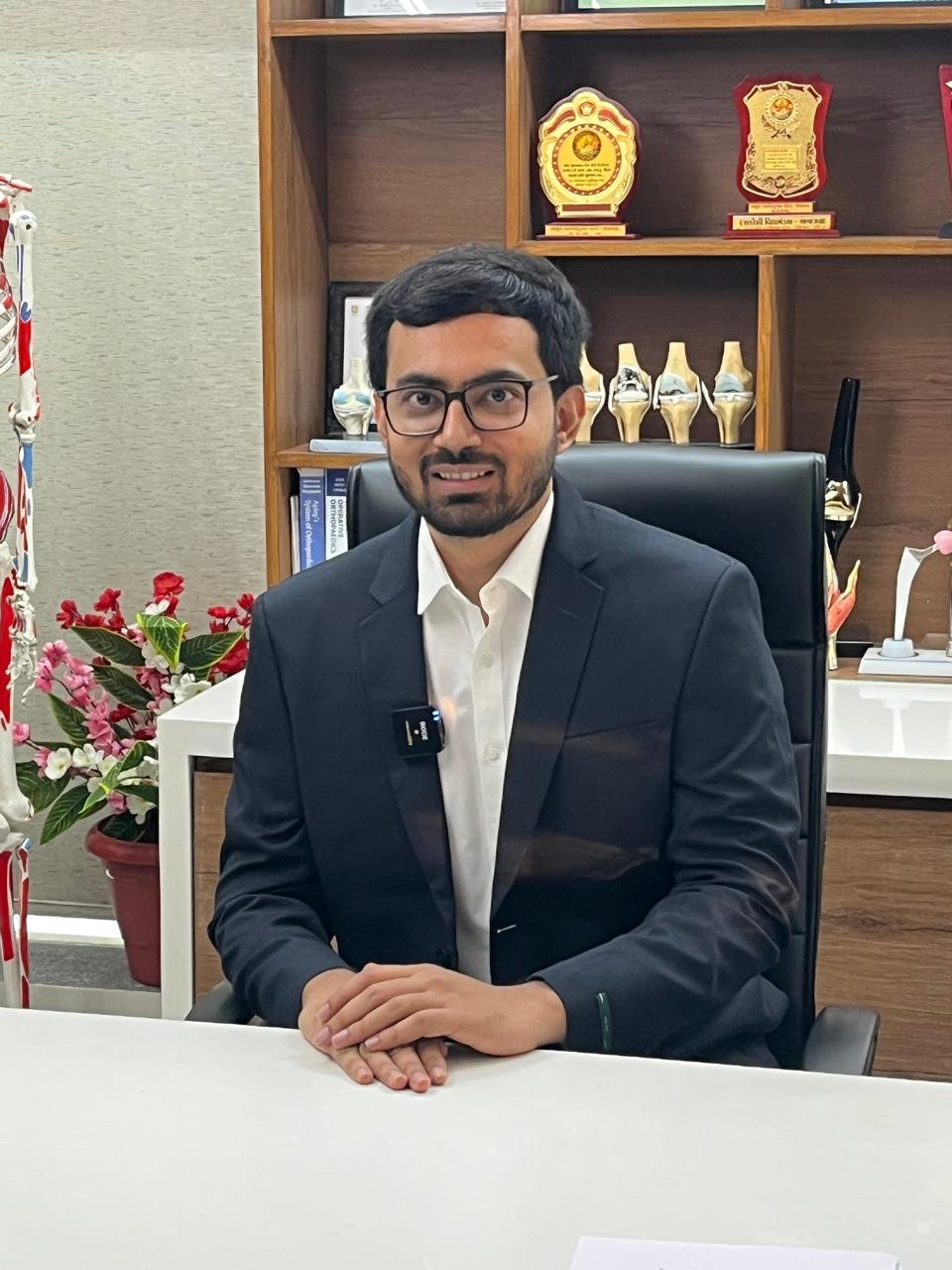
Dr. Anshul Patel's profile:
- MS Orthopaedics
- Senior Residency in Gandhinagar
- Fellowship in Hip & Knee Joint Replacement
- Experience in trauma and orthopaedic surgery
- Experience in joint replacement procedures
- Patient-focused diagnosis and treatment planning
His profile also notes more than 10 years in practice, with 45,000+ patients seen, 12,000+ trauma surgeries, and 12,000+ joint replacements to date.
Patient-Centred Orthopaedic Care
No standard template here. It's about the person in front of him.
Consultation usually digs into:
- What is causing the pain or trouble moving around?
- How severe is the condition?
- Is it getting in the way of your everyday activities?
- Could this be managed without going the surgery route?
- If surgery is required, which procedure is appropriate?
- What rehabilitation will be needed after treatment?
That way you actually understand what's going on, not just told what to do.
Orthopaedic Surgeon Cost in Gandhinagar
Consultation runs roughly ₹500 to ₹2,000. Depends on the surgeon, the hospital, and the kind of consultation. Just a rough range, actual fees can shift.
| Service | Estimate Cost |
|---|---|
| Orthopaedic consultation | ₹500–₹2,000 |
| X-ray | ₹200–₹1,000+ |
| MRI | ₹2,500–₹6,000+ |
| Physiotherapy | ₹300–₹1,000 per session |
What you end up paying overall comes down to the diagnosis, medicines, physiotherapy, tests, surgery, or whatever's needed. Before you go, it's best to call the doctor and make sure of the exact numbers.
Book an Orthopaedic Consultation in Gandhinagar
Persistent pain, stiffness, trouble moving, don't just sit on it. A consultation sorts out what's actually causing it and whether you need rehab, conservative treatment, or surgery.
For bone, joint, and musculoskeletal concerns in Gandhinagar, book a consultation with Dr. Anshul Patel, MS Orthopaedics.
Frequently Asked Questions
1. What does an Orthopaedic Surgeon in Gandhinagar treat?
Pretty much anything in the musculoskeletal system, bones, joints, muscles, ligaments, tendons. Whether it's handled surgically or not comes down to the diagnosis.
2. When should I see an orthopaedic surgeon?
Persistent bone or joint pain, swelling, stiffness, trouble walking, restricted movement, sports injuries, fractures, pain after an accident, any of that.
3. Do all orthopaedic problems require surgery?
No. Medication, physiotherapy, exercise, activity changes, rehab, that covers a lot of ground. Surgery only when it's actually called for.
4. What happens during an orthopaedic consultation?
Symptoms, medical history, physical exam. Imaging or other tests if needed to confirm what's going on.
5. What tests may an orthopaedic surgeon recommend?
X-ray, MRI, CT scan, others, whatever fits your symptoms and the exam findings.
6. Can I consult an orthopaedic surgeon for knee pain?
Yes. Arthritis, injury, ligament issues, cartilage damage, could be any of these. An evaluation narrows it down.
7. Can an orthopaedic surgeon treat sports injuries?
Yes, bones, joints, ligaments, tendons, muscles, all of it. Rehab, physiotherapy, or surgery depending on severity.
8. How do I know whether I need orthopaedic surgery?
Diagnosis, severity, how much it's limiting you, response to non-surgical treatment — your surgeon walks you through it.
9. How long does orthopaedic treatment take?
Varies a lot. Minor stuff, a few weeks. Major surgery, months, with structured rehab.
10. What should I bring to my orthopaedic consultation?
Bring along any old X-rays or MRI/CT reports you have, your medical records, a list of what medicines you're currently on, and details of any past injuries or treatment you've had.
11. Can orthopaedic problems be treated without surgery?
Often, yes. Medication, physiotherapy, exercise, rehab, and lifestyle changes take care of plenty of cases without needing an operation.
12. Where can I consult Dr. Anshul Patel in Gandhinagar?
He's available as a visiting consultant at Radhe Multispeciality Hospital, Kudasan, Gandhinagar. It's a good idea to confirm timings before heading over.