Knee pain is one of those problems people tend to put up with for months. You take the stairs more slowly, skip the walk, sit with your leg stretched out. For some it starts after a fall or a bad twist. For others there’s no event at all, the knee just gets sore over time. Whichever group you’re in, finding the cause is what decides the right Knee Pain Treatment in Ahmedabad, so that’s where to begin.
Why Does Knee Pain Occur?
Your knee has bones, cartilage, ligaments, tendons and small fluid sacs packed into a tight space, and all of them take load whenever you stand or walk. If any one gets injured, inflamed or worn, the knee hurts. Age changes the likely cause, but no age group is exempt.
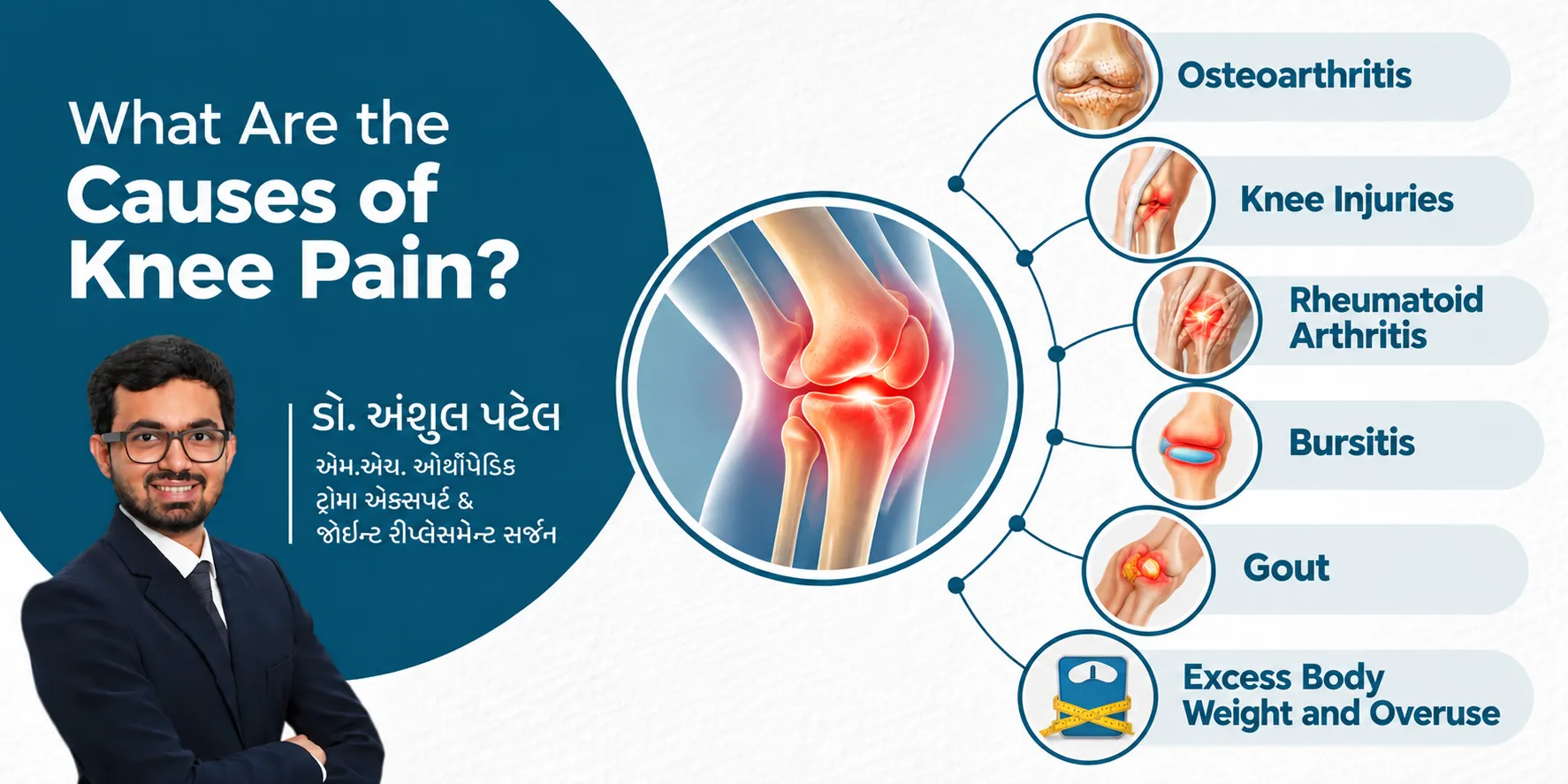
1. Osteoarthritis
This is the cause doctors see most, particularly after middle age. The cartilage that covers the ends of the bones slowly thins out. With less cushioning, the joint gets stiff and painful.
Typical signs are pain on stairs or longer walks, stiffness after sitting, some swelling, and a knee that won’t fully bend or straighten.
2. Knee Injuries
Falls, road accidents and sports are the usual reasons. Which structure is hurt makes a difference to how it feels.
A torn ligament, the ACL for example, often leaves the knee feeling loose or likely to buckle. A meniscus tear (the meniscus is the rubbery pad between the thigh bone and shin bone) causes swelling, pain, and sometimes a catching sensation. A simple sprain or strain is milder, mostly soreness and puffiness that fades over a few days to weeks.
3. Rheumatoid Arthritis
This one is an autoimmune condition, meaning the body’s defence system attacks its own joint lining. The knee swells and aches. Unlike wear-and-tear arthritis, it often involves more than one joint, and stiffness is usually at its worst first thing in the morning.
4. Bursitis
Small fluid-filled sacs called bursae reduce friction around the knee. When one gets irritated or inflamed, the front or side of the knee turns tender and swollen. It’s common in people who kneel a lot for work or prayer, and bending or kneeling makes it worse.
5. Gout
Uric acid can form crystals inside a joint, and the knee is one place this happens. The attack is often sudden. The knee becomes very painful, red, warm and swollen, sometimes within hours.
6. Excess Body Weight and Overuse
Body weight matters more than most people expect, because the knees carry several times your weight when you walk or climb. Long hours standing, repetitive work and hard training with little rest add to the strain.
What Are the Common Symptoms of Knee Problems?
Some people only feel a dull ache. Others find ordinary movement hard. What you notice usually depends on the cause and on how long it has been going on.
The things to pay attention to are pain when walking, running or using stairs, swelling or tenderness around the joint, and stiffness that shows up when you get out of bed or stand after sitting. Trouble bending or straightening the knee counts too, as does clicking that comes with pain, and a sense that the knee might give way under you.
Some signs need quick attention. If the knee swells up suddenly, you can’t put any weight on it, or it turns red and hot and you have a fever, don’t wait. See a doctor the same day.
How Can You Manage Knee Pain?
Treatment follows the cause, so the doctor will first examine the knee and may order an X-ray or scan. After that, the plan could include any of the following.
Medication: Painkillers or anti-inflammatory tablets can bring down pain and swelling. Take them only as your doctor tells you.
Physiotherapy: A trained physiotherapist gives exercises that strengthen the thigh and hip muscles so they share the load with the knee. It’s often the most useful part of treatment.
Lifestyle changes: Losing even a few kilos takes noticeable pressure off the joint. Walking and swimming are kinder to the knee than running or jumping.
Supports: A brace or a walking stick helps in some cases.
Surgery: This is for severe injuries or joints that are badly damaged, and only when other treatment hasn’t worked.
Get the Right Knee Pain Care at Krishna Hospital, Ahmedabad
At Krishna Hospital , you can have your knee examined and discuss treatment options based on your symptoms and the condition of the joint.
If knee pain is getting in the way of your day, get it seen to. To ask about Knee Pain Treatment in Ahmedabad , call Krishna Hospital on 7575010050.
Frequently Asked Questions
1. What is the most common cause of knee pain?
Osteoarthritis, injuries, ligament damage and overuse. Which applies to you depends on your age, history and symptoms.
2. Why do my knees hurt when climbing stairs?
Stairs put extra load through the knee, so any problem shows up there first. It may be osteoarthritis, a kneecap problem, damaged cartilage or weak thigh muscles. An examination will tell you which.
3. Can knee pain occur without an injury?
Yes, and it’s quite common. Osteoarthritis, rheumatoid arthritis, gout and bursitis can all cause pain with no fall or accident behind it.
4. Which doctor should I consult for knee pain in Ahmedabad?
An orthopaedic doctor. They’ll examine the knee and, depending on what they find, may suggest an X-ray, MRI or physiotherapy.
5. How can I reduce knee pain naturally?
Rest from whatever aggravates it, use an ice pack wrapped in cloth, keep your weight in check and do gentle strengthening exercises. If the pain is severe or won’t go away, see a doctor.