Constant knee pain has a way of turning even ordinary tasks into a struggle. Walking, stairs, standing around for a bit, getting up out of a chair, any of it can hurt. Once medication, exercise, and other treatments stop doing much, Total Knee Replacement in Ahmedabad tends to be the next real step toward less pain and better movement. Plenty of people end up here after years of knee arthritis or joint damage, mostly because the relief actually lasts and gets them back into daily life.
Is Your Knee Pain Telling You Something?
Not every knee problem needs surgery. A lot of knee pain is just temporary, from a minor injury or simple overuse. However, pain that doesn't go away and that interferes with your everyday life is not something you should have to put up with.
You should see an orthopaedic specialist if you have one or more of the following:
- Knee pain relief for months
- Difficulty walking or climbing stairs
- Swelling that keeps coming back
- Stiffness after sitting or sleeping
- Pain even while resting
- Decreased mobility in the knee joint
By being checked early, it targets the pathology that is legitimate and curtails any additional damage to the joint.
What Is Total Knee Replacement?
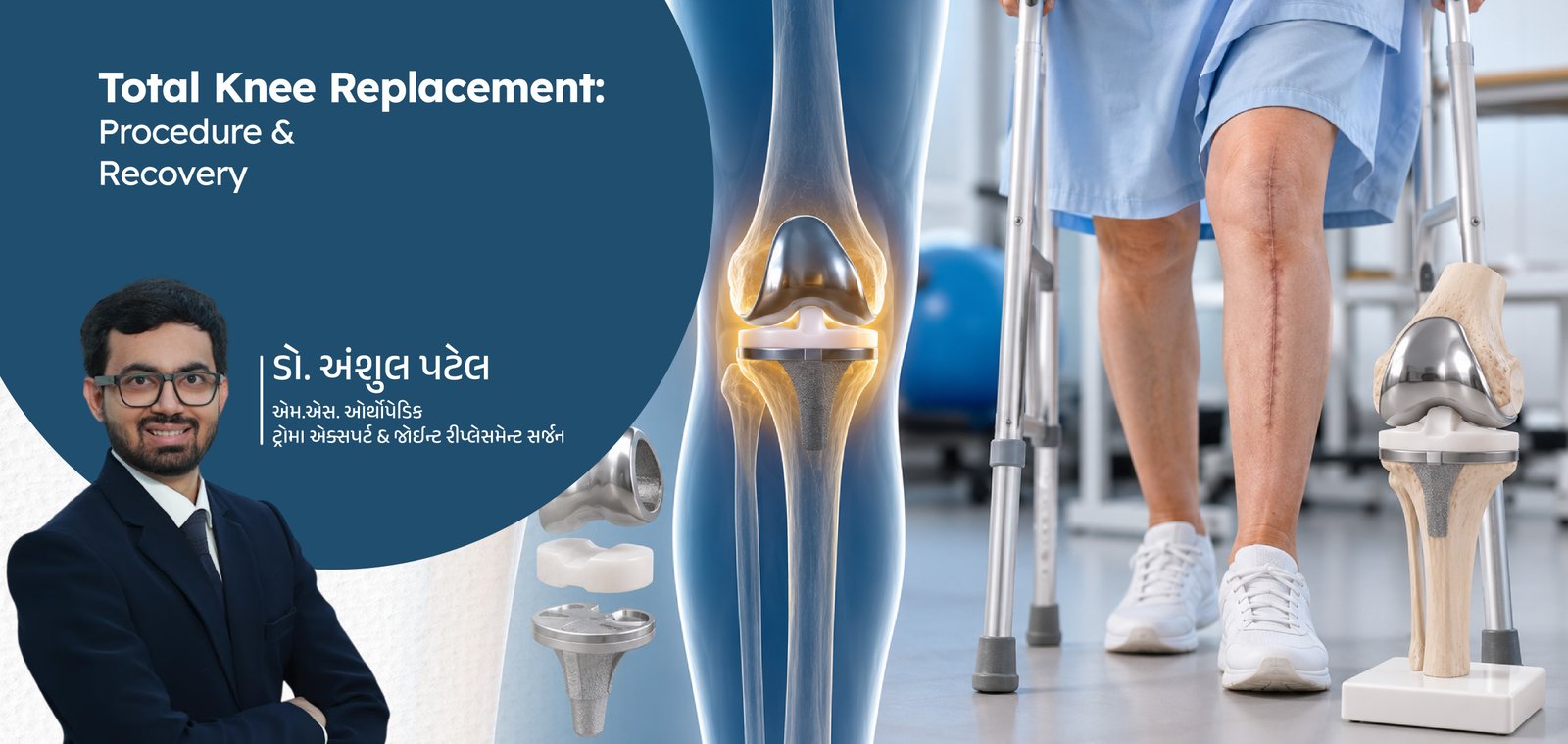
Total knee replacement is a surgery where the damaged surfaces of the knee joint get replaced with artificial components, usually medical-grade metal and durable plastic. These implants are built to move the way a healthy knee would, while cutting down the pain that comes from worn-out cartilage.
It's not really just about swapping out the joint. The primary purpose is to restore movement, improve stability, and let patients feel autonomous again.
Understanding the Procedure Step by Step
Knowing what actually happens during surgery tends to ease a lot of the anxiety around it.
Before Surgery: Your doctor runs a complete medical assessment first. Blood tests, X-rays, sometimes an MRI too, all of it helps plan out the procedure properly. You'll likely also get some advice on exercises, nutrition, and medication before you go in.
During Surgery: The first step creates the knee joint by cleaning away damaged cartilage and worn bone. The surgeon thereafter performs tissue-sparing and replaces the joint with a specially designed implant made to replicate the natural form and function of that articulation. We position everything exactly right to optimise stability and function of the knee. The entire procedure typically takes one to two hours, plus or minus, depending on the condition of the knee.
After Surgery: Within one day of surgery, most patients begin to move their knees. Physios accompany them with elementary exercises which build firmness and flexibility while also making difficulties much less probable.
Recovery Timeline: What You Can Expect
Recovery varies for everyone, but entering the process with more realistic expectations goes a long way.
First few weeks: Manage pain with medications and commence gentle supported walking. You know that physical therapy starts as soon as possible too, mostly just to keep blood flowing and your joints moving.
6 weeks: Many patients progressively walk more and feel better able to handle daily activities. The swelling goes down gradually as well — with continuous exercise and appropriate precautions.
3 Months: At this stage, most patients begin to see actual gains in mobility, strength and comfort. For example, everything from walking and laundry to climbing stairs tends to noticeably get easier.
6 Months to 1 Year: The knee keeps improving as the muscles around it get stronger, and flexibility builds further. Many patients get back to an active lifestyle by now, with noticeably less discomfort than before.
Simple Tips for a Faster Recovery
How well you recover depends on more than just the surgery, it's really about what you put into it afterwards too.
A few things that genuinely help:
- Perform physiotherapy exercises regularly.
- Do not let your wound get wet or dirty
- Maintain a healthy body weight.
- Maintain a healthy diet containing protein and vitamins.
- Walking with aids: Walking aids should be used as needed only
- Attend every follow-up appointment.
- Do not engage in activities with high impact until your surgeon allows it.
Staying consistent through rehab is usually what separates a good long-term result from an average one.
What are the Potential Benefits of Total Knee Replacement?
The improvements patients see often go well beyond just pain relief.
Here are some benefits patients report:
- Elimination or significant reduction of CKP
- Better walking ability
- Improved joint movement
- Increased independence
- Less pain leading to better sleep
- Improved overall quality of life
Total knee replacement in Ahmedabad for many only means getting back to the things they had given up on.
Final Thoughts
Persistent knee pain shouldn't be something that runs your life. If everyday movement's gotten difficult despite medication and therapy, Visit Dr Anshul Patel at Krishna Hospital, an experienced orthopaedic specialist is really the next right step. Total knee replacement in Ahmedabad has helped plenty of patients get their mobility back, cut down pain, and return to a more active life. You can also call 7575010050 to book your appointment. Early evaluation, a proper treatment plan, and genuine commitment to rehab are still what actually drive the best outcome.
FAQ
How long does a total knee replacement last?
Modern knee implants often hold up for 15 to 20 years, sometimes longer, depending on age, activity level, and overall health.
When can I walk after surgery?
Most patients are standing and walking with support within 24 hours of surgery.
Can both knees be replaced together?
Some patients are good candidates for having both knees done at once. It really comes down to their overall health though.
Can I climb stairs after surgery?
Yes. With proper healing and rehab, most patients get back to climbing stairs comfortably.
Who is not suitable for knee replacement?
Patients with uncontrolled infections or certain other medical conditions usually need those treated first before surgery's even considered.