Shoulder pain has a way of getting into everything. Reaching for something on a shelf, putting on a garment, or simply sleeping down at night can all turn into a minor issue. When medication and physiotherapy fail to produce results, surgery is frequently considered. And for many people considering Shoulder Replacement Treatment in Ahmedabad, the first question they ask is whether they need a full replacement or something less invasive, such as arthroscopy.
What Is Shoulder Arthroscopy?
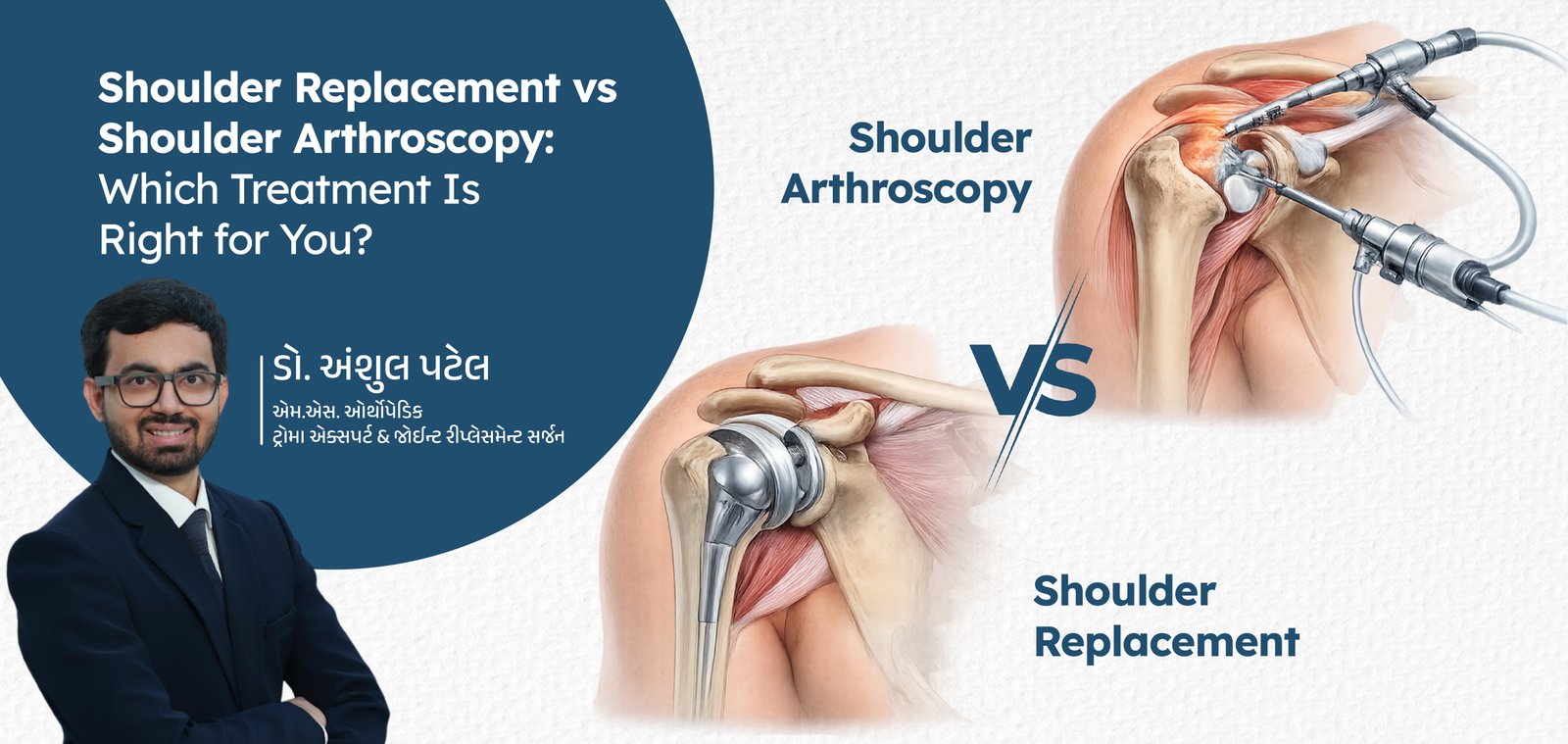
Arthroscopy is about as minimally invasive as shoulder surgery gets. Small incisions, a tiny camera called an arthroscope, and the surgeon works from there to see and repair whatever's damaged inside the joint.
It tends to come up for:
- Torn rotator cuffs
- Shoulder impingement
- Labral tears
- Shoulders that keep dislocating
- Loose cartilage or bone fragments that need clearing out
- Inflammation that hasn't responded to more conservative treatment
Because the incisions stay small, most patients deal with less pain afterward and get back on their feet faster than they would with open surgery.
What Is Shoulder Replacement Surgery?
This one's more involved, damaged parts of the joint get swapped out for artificial implants. It's usually the route taken once the joint is too far gone for arthroscopy to realistically fix.
People tend to end up here when they're dealing with:
- Advanced arthritis in the shoulder
- Serious joint degeneration
- Complex fractures
- Rotator cuff damage that can't be repaired
- Pain and stiffness that's dragged on for a long time with real loss of movement
A lot of patients considering Shoulder Replacement treatment in Ahmedabad have already been living with shoulder pain for months, sometimes years, having already tried medication, injections, physiotherapy, the whole list, without much lasting relief.
Shoulder Replacement vs Shoulder Arthroscopy
| Shoulder Arthroscopy | Shoulder Replacement |
|---|---|
| Minimally invasive procedure | Joint replacement surgery |
| Small incisions | Larger surgical approach |
| Repairs damaged tissues | Replaces damaged joint surfaces |
| Faster recovery in most cases | Longer recovery but excellent pain relief |
| Best for soft tissue injuries | Best for advanced joint damage |
| Usually performed in younger or active patients | Often recommended for severe arthritis or extensive damage |
Which Procedure Is Better?
There's genuinely no single right answer, every shoulder tells a different story.
If the joint surfaces themselves are still in decent shape and it's really the tendons, ligaments, or cartilage that need work, arthroscopy is usually the better fit.
Once arthritis has worn the joint surfaces down, or the damage is simply too extensive to repair piece by piece, replacement tends to become the more sensible option.
An experienced orthopaedic specialist weighs your symptoms, imaging, lifestyle, and general health before actually recommending either path.
Signs You May Need Shoulder Surgery
It's worth booking a consult with a shoulder specialist if you're dealing with:
- Shoulder pain that's stuck around for months
- Trouble lifting your arm the way you used to
- Pain bad enough to interrupt sleep
- Stiffness that's getting in the way of daily activities
- Weakness limiting work or sport
- Little to no improvement despite physiotherapy or medication
Getting evaluated early usually keeps more options on the table before things progress further.
Recovery After Both Procedures
How recovery goes really depends on which surgery you had and your general health going in.
With arthroscopy, many patients are moving gently again within a few days. Physical therapy does most of the heavy lifting from there, rebuilding strength and flexibility over time.
Replacement surgery takes longer, understandably, since the joint needs real time to heal around the new implant. Function tends to come back gradually over several months, guided by rehab along the way.
Either way, sticking to your surgeon's instructions and actually showing up for physiotherapy makes a real difference in how things turn out.
How to Decide Between Shoulder Replacement and Arthroscopy
A few things your doctor is likely weighing before recommending either surgery:
- Your age
- What's actually causing the pain
- How severe the joint damage is
- Your activity level
- What the imaging shows
- Treatments you've already tried
- Overall health
If you're looking at Shoulder Replacement treatment in Ahmedabad, it's worth choosing a hospital with genuinely experienced orthopaedic surgeons, solid diagnostic facilities, current surgical techniques, and structured rehab support once surgery's done.
Final Thoughts
Choosing between shoulder replacement and arthroscopy really comes down to the actual condition of your shoulder, not a matter of personal preference. A proper diagnosis at Krishna Hospital is what points toward the treatment most likely to bring real pain relief, better movement, and a noticeably improved quality of life. You can also call 7575010050 to book your appointment. If shoulder pain has been limiting your daily routine for some time, contacting an experienced orthopaedic specialist sooner can help prevent further injury and get you back to an active lifestyle faster.
Frequently Asked Questions
Is shoulder replacement a permanent solution?
Modern implants are built to last for years, though how long really varies with activity level, bone quality, and overall health.
Which surgery has a shorter recovery?
Arthroscopy, generally, simply because it's less invasive to begin with.
Can arthritis be treated with arthroscopy?
In select early cases, sometimes. Once arthritis is more advanced, though, replacement is usually the more realistic path.
Is shoulder replacement painful?
There's pain right after surgery, that's expected, but it eases as healing progresses. Most patients end up with real, lasting relief once they're through the recovery period.
Can I return to sports after shoulder surgery?
Many patients do get back to recreational activity after rehab. Your surgeon will have a better sense of timing based on your recovery and exactly which surgery you had.