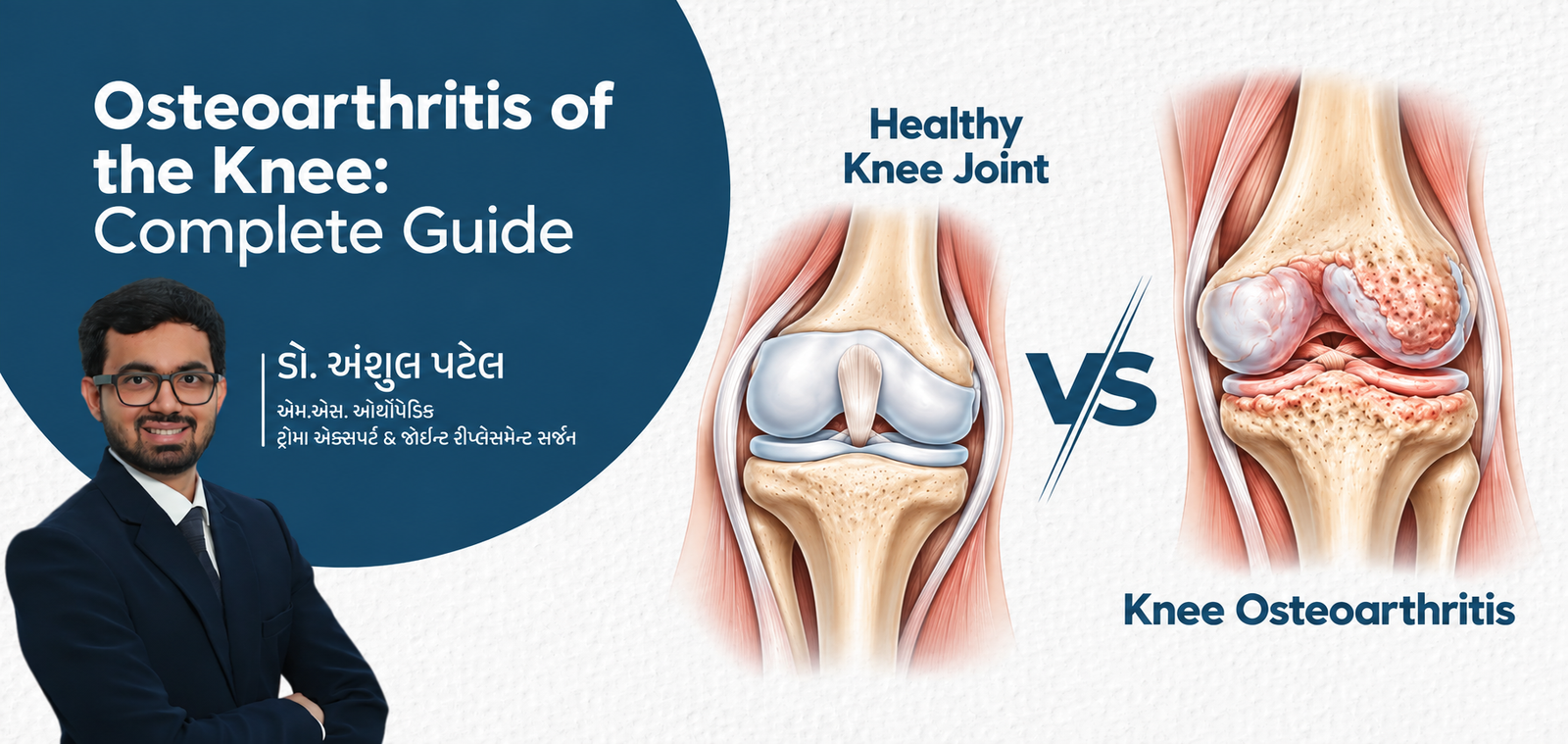
There's a version of you that used to take the stairs without thinking twice. Lately, though, maybe you're gripping the railing a bit tighter, or that walk to the kitchen leaves your knee aching by the time you get there. Getting up from a chair shouldn't require bracing yourself first. If this sounds familiar, it might not just be "getting older", it could be osteoarthritis quietly working its way in. Once it starts interfering with the small stuff, a knee replacement surgeon in Ahmedabad can help you understand exactly what's happening and what to do about it. What actually helps depends on your symptoms, your knee, your age, how active you are, and your overall health, no two people are handled the same way here.
What Is Osteoarthritis of the Knee?
Basically, the cartilage cushioning your knee wears down over time. Pain, stiffness, trouble moving, that's what follows.
Normally, cartilage lets the joint glide smoothly, with no friction. With osteoarthritis, it thins out, and other changes creep in too, bone spurs and swelling. Keep going long enough, and things you used to do without a second thought start feeling genuinely hard.
Why Does Knee Osteoarthritis Happen?
Age plays a part. So does an old injury, carrying extra weight, genetics.
Worth knowing:
- Getting older
- A previous knee injury or surgery
- Carrying extra weight
- Repeated stress on the knee
- It running in the family
- Certain joint or bone conditions
None of this guarantees you'll get it, though, even with a few boxes checked.
How Do You Know If Your Knee Pain Is Osteoarthritis?
Pain that won't quit, stiffness, and trouble moving the joint, usually the first signs people notice.
Things to watch for:
- Pain while walking or on stairs
- Stiffness after sitting a while
- Swelling or tenderness to the touch
- Less movement than you used to have
- A grinding or crackling feeling
- Trouble standing up or sitting down
- The knee feeling weak, like it might give out
Doesn't look identical for everyone. If it's sticking around or getting in the way, worth getting checked.
How Is Knee Osteoarthritis Diagnosed?
Usually starts simple, a doctor asks about your symptoms, examines the knee, orders an X-ray if it's needed.
Expect questions, when did it start, what makes it worse, any old injuries. X-ray shows what's changed in the joint. Sometimes other tests come in too, if something else needs ruling out.
What Can You Do Before Considering Surgery?
Mild to moderate cases, often manageable without surgery, at least to start.
- Physiotherapy, strengthening exercises
- Low-impact stuff, walking, cycling, swimming
- Managing weight, where that applies
- Whatever medicines your doctor recommends
- Supportive devices, if you need them
- Injections, sometimes, for temporary relief
Exercise actually matters here, stronger muscles around the knee give it real support. But the plan's got to fit your condition, not push through pain that shouldn't be pushed through.
When Is Knee Replacement Considered?
It comes up when severe pain and joint damage keep messing with daily life, even after trying proper non-surgical treatment.
Having osteoarthritis doesn't automatically mean surgery's next, though. Your doctor's weighing your pain, your mobility, how damaged things actually are, and how you've responded to everything else tried so far.
Depending on which part's affected, partial or total replacement might come up, damaged surfaces get swapped out, artificial ones go in, aiming to bring back movement and cut the pain down.
A knee replacement surgeon in Ahmedabad can look at your case specifically and tell you honestly whether surgery's the right call.
Focus on the Patient, Not Just the X-Ray
Good care here looks at how your knee's actually affecting your life, not just what a scan shows.
Two people, nearly identical X-rays, can still feel completely different levels of pain, completely different limits on what they can do. Treatment should factor in your routine, your work, what you actually want to get back to doing, your pain, and your expectations.
Bottom line, the goal's helping you move comfortably again, stay independent, get back to whatever matters to you.
Get the Right Treatment for Your Knee
Knee osteoarthritis can slow you down, sure, but living with ongoing pain doesn't have to mean giving up your life as you know it. Getting checked early helps you actually understand what's going on and what's available.
Knee pain getting in the way of your everyday stuff? Talk to an experienced knee replacement surgeon in Ahmedabad and get a proper assessment.
For consultation and guidance, contact Krishna Hospital at 7575010050 and talk it through with the team.
Frequently Asked Questions
Can knee osteoarthritis be cured completely?
No cure exists right now. Symptoms, though, often manageable with exercise, lifestyle changes, medication, and surgery when it's genuinely needed.
Can walking worsen knee osteoarthritis?
Generally fine, even good, as a low-impact activity. How much you do, though, should match your symptoms. A doctor or physio can help you figure that out.
When should I see a doctor for knee pain?
If it's persisting, limiting movement, causing swelling, or just getting in the way of normal life.
Does everyone with knee osteoarthritis need knee replacement?
No, not even close. Plenty of people manage fine without surgery. Replacement tends to come up when pain and disability stay significant despite everything else tried.
How long does recovery from knee replacement take?
Varies a lot, person to person, depends on health, rehab, the type of surgery done. Full recovery, often several months.