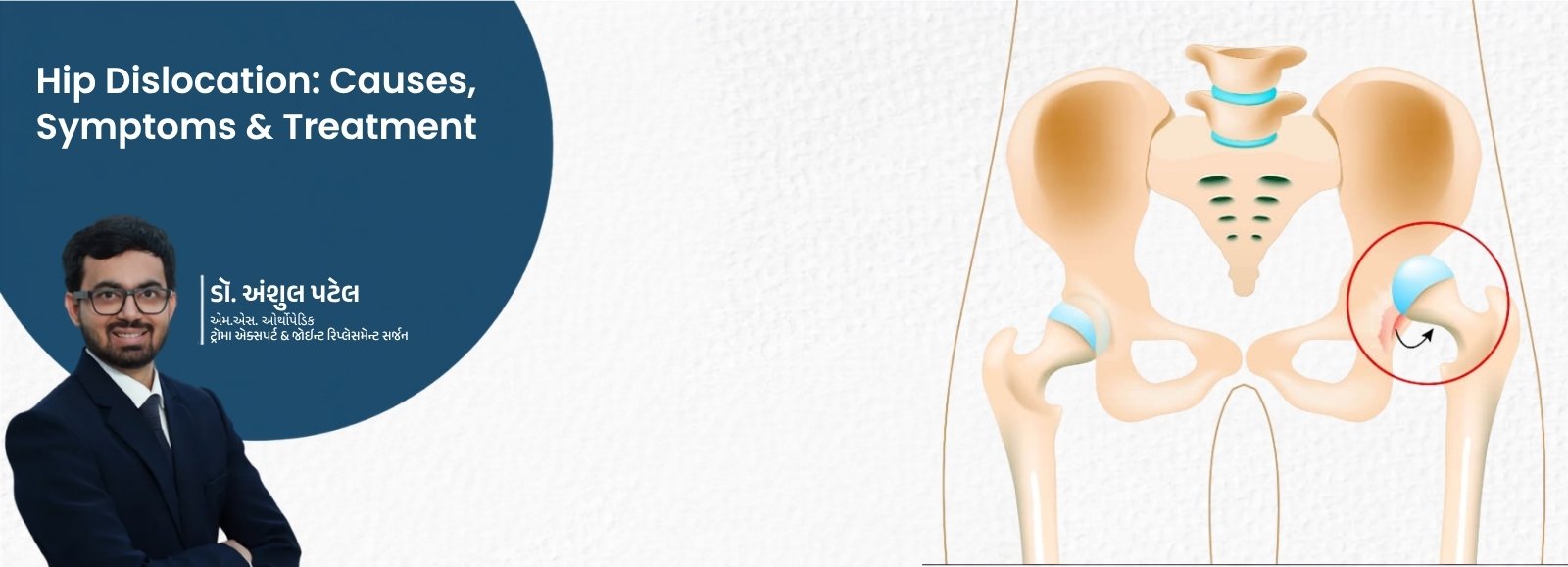
Picture the top of the thigh bone popping out of its socket in the hip, that's a dislocation, and it usually takes something serious to cause it. Once it happens, walking or even shifting weight onto that leg becomes impossible. Getting Hip dislocation treatment in Ahmedabad quickly isn't optional here; waiting around raises the odds of real damage to the nerves, blood vessels, and the joint itself.
What Is a Hip Dislocation?
The hip is a ball-and-socket joint, and a strong one, it's what lets you stand, walk, and move your legs freely. When it dislocates, the femoral head gets pushed out of the acetabulum, the pelvis's socket.
Most dislocations come from high-impact trauma, though people with hip dysplasia or a previous hip replacement tend to be more prone to it.
This isn't something to manage at home. A dislocated hip needs urgent medical assessment, full stop.
What Causes a Hip Dislocation?
It generally takes real force to dislocate a healthy hip. Road accidents are a common cause, along with serious falls, sports injuries, and workplace accidents. Hip dysplasia raises the risk too, as does an artificial hip slipping out of place after a replacement.
In many traumatic cases, the dislocation shows up alongside a fracture or soft-tissue injury, exactly why a full evaluation matters before treatment begins.
How Do You Know If Your Hip Is Dislocated?
The symptoms tend to hit suddenly and hard, hard to mistake for anything else. Severe pain in the hip or groin is typical, along with an inability to move the leg normally, or to stand or bear weight on that side. The leg might look shorter or twisted, and swelling, bruising, or muscle spasms often follow. Sometimes there's a visible change in the hip's shape or position, and numbness or reduced feeling in the leg or foot isn't unusual either.
If any of this shows up after an accident or a bad fall, get emergency care, don't wait around hoping the pain settles on its own.
Why Immediate Treatment Matters
A dislocated hip rarely stays contained to just the joint. It can put real pressure on nearby nerves, blood vessels, muscles, and other tissue. The longer treatment gets delayed, the higher the risk of complications, nerve damage, damage to the bone tissue, and arthritis further down the road.
That's the whole reason speed matters with Hip dislocation treatment in Ahmedabad, get it diagnosed fast, put back into place safely, and follow up properly afterward. Just numbing the pain isn't the goal here.
How Is a Dislocated Hip Diagnosed?
A specialist will look at the hip itself first, checking how the leg moves, whether you can feel things normally, and whether blood's still flowing the way it should. An X-ray usually shows exactly where the hip's sitting and picks up any breaks. Sometimes doctors want more detail than an X-ray gives, so they'll order a CT scan to get a clearer look at the bone and whatever's around it.
It's not only about confirming there's a dislocation. Doctors also want to know why it happened and whether anything else got hurt along the way.
Hip Dislocation Treatment: What Happens Next?
What comes next depends on the type of dislocation, and whether anything else is going on with it.
1. Closed Reduction
Most of the time, a doctor can gently guide the hip back into place by hand, that's called a closed reduction. You'll usually be sedated or given anaesthesia first, since it helps with pain and stops the muscles from tensing up during the process.
2. Surgery When Required
Sometimes closed reduction isn't an option, maybe there's a break, or serious damage to the tissue around the joint. In those cases, surgery becomes the way forward. If someone's dealing with a dislocated artificial hip, they might need extra treatment depending on how their implant's holding up.
3. Recovery and Rehabilitation
Getting the hip back in place is only step one, it still needs time to actually heal. Your doctor might ask you to go easy on movement for a bit, use something to help you walk, and work through physiotherapy. How that recovery plan looks really depends on the injury, what treatment you had, and your overall health.
At Krishna Hospital, treatment gets built around you specifically, your injury, how much pain you're in, how mobile you are, anything else going on health-wise, and what you're hoping to get back to. Keeping you and your family in the loop matters just as much, so nobody's left guessing what comes next.
What Should You Do If You Suspect a Hip Dislocation?
Don't try pushing or pulling the hip back into place yourself. Keep weight off the injured leg, keep the person as still as you can, and get urgent medical care moving. Trying to reposition the joint without medical supervision can genuinely make things worse.
Gone through a bad fall, a road accident, or a sports injury and can't move your hip the way you normally would? Don't wait it out; that's an emergency. Call +91-7575010050 right away or visit Krishna Hospital and get Hip dislocation treatment in Ahmedabad.
Frequently Asked Questions
Is a hip dislocation a medical emergency?
Absolutely. Whatever's happening to the joint can also be happening to the nerves and blood vessels right next to it, so this isn't a "wait and see how it feels tomorrow" situation.
Can a dislocated hip heal without treatment?
Not on its own. A full dislocation genuinely needs medical reduction, trying to fix it yourself at home isn't a safe option.
Can you walk with a dislocated hip?
Rarely. Most people with a complete dislocation can't bear weight or move the leg normally at all, given how severe the pain and displacement usually are.
How long does recovery from a hip dislocation take?
It varies a lot, depends on how severe the dislocation was, whether there's an associated fracture or tissue damage, and what treatment was needed. Some patients are looking at several weeks or more of restricted activity and rehab.
When should I see an orthopaedic specialist in Ahmedabad?
Right away, if there's been significant trauma along with severe hip pain, an abnormal leg position, or an inability to move or bear weight on the leg. Getting assessed early helps pin down the injury and guide the right treatment from the start.
Need help after a hip injury?
Don't brush off severe hip pain or trouble walking after an accident. Getting assessed in time can genuinely shape how well, and how fully, you recover at Krishna Hospital.