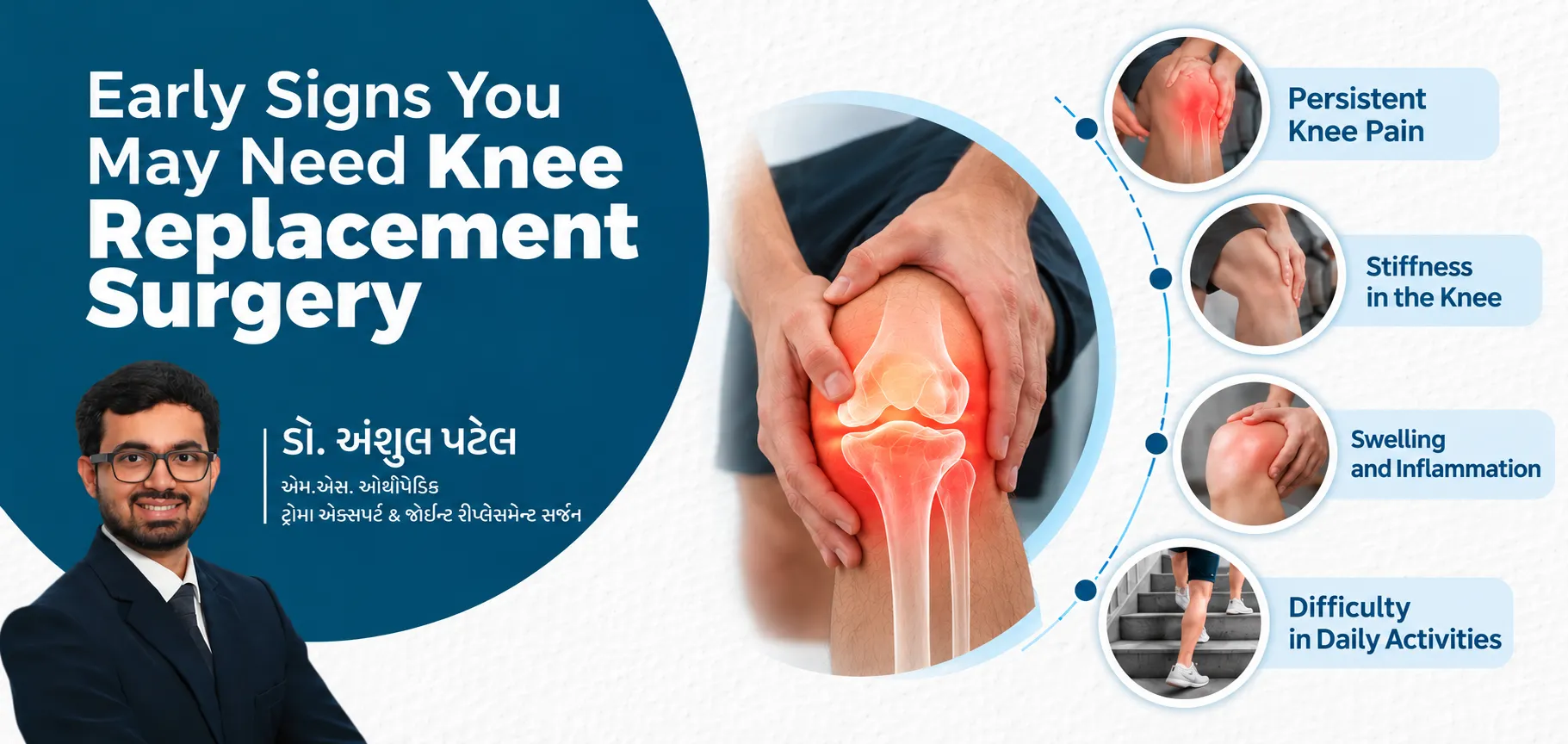
A twinge on the stairs, a slower walk to the market, and a knee that complains when you've been on your feet too long. One sore day doesn't mean much. Pain that keeps coming back might be because it can point to damage inside the joint. If you're weighing up knee replacement surgery in Ahmedabad, knowing the early signs helps you get treated before your mobility drops any further.
7 Warning Signs You Should Not Ignore
Knee replacement becomes an option when severe arthritis or joint damage keeps interfering with daily life even after proper non-surgical treatment. Seven signs suggest it's worth seeing an orthopaedic specialist.
1. Knee Pain That Keeps Returning
After a long walk or a hectic day, a sore knee usually settles with rest. When the pain lasts for weeks or turns up more often, get it looked at.
Osteoarthritis is a common culprit. The cartilage that cushions the joint wears down bit by bit.
Avoid whatever sets the pain off, and book an orthopaedic assessment if it doesn't ease. The doctor can work out whether you need medication, physiotherapy or more.
2. Difficulty Walking or Climbing Stairs
Taking the lift to avoid one flight? Stopping to rest after a short walk?
That's your knee telling you it's limiting how you move. Once ordinary activities get harder, a specialist should hear about it.
3. Stiffness After Sitting or Waking Up
Getting out of a chair after a long sit feels like a project. Mornings are slow. You can't bend or straighten the leg fully.
A stiff knee now and then can have many causes. Stiffness that stays, along with pain and less movement, can mean arthritis or another joint problem. Tell your doctor about it instead of relying on painkillers.
4. Swelling That Does Not Settle
Your knee looks puffy and feels tight, sore, maybe a little warm. One bad day isn’t a worry, but swelling that keeps coming back can point to arthritis, inflammation or another joint problem.
Get it checked if it returns, or if it gets in the way of bending your knee. Swelling that comes on suddenly and badly, especially with a fever or a red, hot joint, is a reason to seek medical help urgently.
5. Knee Pain That Disturbs Your Sleep
Pain at rest, or pain that wakes you at night, wears you down. Sleep suffers, then your mood, then your energy.
It can go with advanced arthritis, though other conditions cause it too. Only an examination can tell which.
6. Your Knee Feels Weak or Unstable
Does it feel like the knee might buckle when you stand or walk? Have you started reaching for the wall or the railing?
Joint damage, weak muscles or ligament trouble can all cause that. If it keeps throwing your balance off, get assessed. You'll lower your chances of a fall.
7. Other Treatments No Longer Provide Enough Relief
Maybe you've tried medication, physiotherapy, slowing down, and injections. If none of them helps much now, your doctor may bring up other options.
When severe arthritis limits daily life a lot, knee replacement may be the right step. It depends on your symptoms, the examination, your X-rays, your general health and what you're hoping to get back to.
Does Every Knee Pain Patient Need Replacement Surgery?
No. Knee pain on its own doesn't mean surgery.
Many patients improve without it, especially when the joint damage isn't advanced. Your doctor may suggest physiotherapy, strengthening exercises, weight management, medication or other treatment first.
Replacement tends to come into the conversation when the damage is substantial, and the pain and limited movement carry on despite proper treatment.
Nobody should be treating an X-ray. The point is that you can move comfortably and get on with your life.
Get the Right Guidance for Your Knee Pain
Constant knee pain makes simple things feel exhausting. A good treatment plan starts with knowing what's causing it and how it affects your day.
At Krishna Hospital , Dr Anshul Patel can talk you through the treatment options that fit your knee condition and how well you move. If pain or stiffness is getting in the way of your life, get professional guidance rather than coping alone.
Book a consultation: Call 7575010050 to discuss your knee concerns and find out whether knee replacement or another treatment could suit you.
Frequently Asked Questions
1. What are the earliest signs that I may need knee replacement surgery?
Pain that won't go away, stiffness, swelling, trouble walking and reduced movement can all signal a serious joint problem. A medical assessment is the only way to know if replacement is appropriate.
2. At what age is knee replacement surgery recommended?
There isn't one. Doctors look at the extent of joint damage, your pain, your mobility, your overall health, and the benefits and risks of surgery. Age alone doesn't decide it.
3. Can I avoid knee replacement surgery?
Possibly. Physiotherapy, medication, suitable exercise and weight management can keep symptoms under control. Surgery is considered when those don't give enough relief, and the joint damage is significant.
4. How do doctors decide whether I need knee replacement surgery in Ahmedabad?
An orthopaedic specialist goes through your symptoms, your medical history, a physical examination and your imaging. They also consider how much the knee pain affects your everyday activities and whether other treatments have helped.
5. How long does recovery from knee replacement surgery take?
It varies with the patient, the surgical approach and general health. Many people manage basic daily activities within the first several weeks. Strength, mobility and a fuller recovery can take several months, so follow your surgeon's rehabilitation plan.