Knee pain can deteriorate someone’s independence one day at a time. Everyday movements like walking, climbing stairs and standing for long periods can become challenging because of joint damage. Most individuals who are researching Knee Replacement Surgery in Ahmedabad have been experiencing years of pain associated with arthritis, injury or age-related degeneration. This surgery is intended to relieve pain, restore range of motion and enable people to return to more normal daily activities when conservative treatments have been ineffective.
This post focuses on what knee replacement surgery is, how it works and a few of the primary benefits of having the surgery done in clear, medically accurate, but easy-to-understand language.
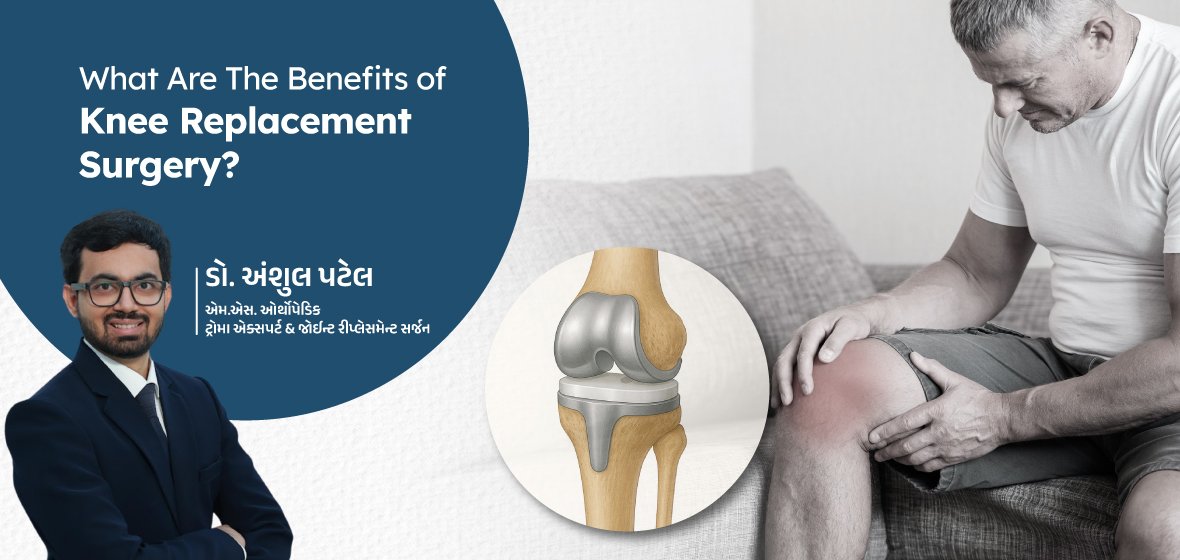
What Is Knee Replacement Surgery?
Knee replacement surgery, also known as knee arthroplasty, is a procedure that replaces part, or all, of a worn-out or damaged joint with an artificial one. Typically, these parts are constructed of metal alloys, high-quality plastics or various metals so that they can move in the most natural position for an artificial joint.
The knee is the joint where the thigh bone meets the large shin bone. But when the cartilage between those bones breaks down, the two collide and grind against one another, resulting in pain, stiffness and loss of mobility. Knee replacement helps you cut out rough movement by replacing the damaged joint surfaces.
How Knee Replacement Surgery Works
The process itself is a protocolised medical procedure:
Pre-Surgical Evaluation
Medical history, imaging findings, physical status and general health define suitability as a candidate for surgery.
Surgical Procedure
The damaged bone and cartilage are cut away. Prosthetic components of the joint are placed to approximate neutral alignment and function.
Post-Surgery Recovery
The post-recovery period differs according to the patient's age and general condition, as well as the quantity of therapy.
Conditions That May Require Knee Replacement
Knee replacement is typically an option when more-conservative measures, such as medication, physical therapy and other treatments, fail. Common conditions include:
- Osteoarthritis :
It is a result of the slow breakdown of cartilage, typically due to age.
- Rheumatoid Arthritis :
An autoimmune disease characterised by chronic inflammation and joint destruction.
- Post-Traumatic Arthritis :
Occurs after a major injury (knee, fracture or ligament).
- Severe Knee Deformity :
Scenarios where the knee is bent or in an improper posture further disrupt balance and walking.
Types of Knee Replacement Surgery
Total Knee Replacement
It replaces the entire joint surface. Recommended for significant joint injury.
Partial Knee Replacement
Only half of the knee is replaced. Suitable for localised arthritis.
Revision Knee Replacement
Performed when the previous implant needs to be remedied or replaced because of wear and tear or complications.
Key Benefits of Knee Replacement Surgery
- Significant Pain Reduction :
One of the first advantages you will notice with knee replacement is pain relief. The majority of patients experience a radical reduction in joint pain upon convalescence and realise improved mobility in their daily movements.
- Improved Mobility and Movement :
Knee injury is distinguished by stiffness and a restricted range of motion; both characteristics are common in the late stages. Now that the wear in the joint is replaced, your mobility is smooth again; walking is easier, sitting is less uncomfortable, and standing is no longer a toe crunch.
- Better Quality of Life :
Decreased pain and better mobility result in increased independence. Patients may not become a burden to friends and relatives in support of the activities of daily living.
- Long-Term Joint Function :
Current knee implants are expected to be long-lived and to function over many years. They will last with proper care and follow-up to support your joints.
- Improved Knee Alignment :
Deformities of the knee due to arthritis or injury can contribute to poor posture and balance. Surgery can also contribute to proper joint alignment, potentially improving overall walking patterns and reducing stress on other joints.
- Enhanced Sleep and Comfort :
Chronic knee pain frequently leads to sleep disturbances. Relief from labour pain may help a woman’s mental state be more at rest, which allows her to heal physically.
- Reduced Dependence on Pain Medication :
Painkillers may have side effects from long-term use. Successful surgery can lead to a decrease in the need for drug therapy under a physician’s care.
Recovery and Rehabilitation
It does take a healing time, and there are many variables. Key aspects include:
- Early mobilisation with physiotherapy
- Muscle-strengthening exercises for the knee
- Gradual return to daily activities
- Regular medical follow-ups
Most patients return to their normal activities within a few weeks; however, complete recovery can take many months.
Risks and Considerations
Like any surgery, knee replacement also has risks, including infection, blood clots or stiffness. However, these risks are normally low when surgery is conducted in accordance with accepted medical procedures, and the patient's recovery after passing under the knife is free of any complications. Patients should strongly consider discussing the risks and advantages with their healthcare provider.
Conclusion
Knee replacement at Krishna Hospital is a proven surgical technique providing close-to-normal pain relief and restoration of lifestyle for patients who have suffered from chronic knee pain due to degenerative joint changes. Knowing the description of how the surgery is performed and the benefits of this type of procedure will help you make a better healthcare choice.